Showing posts sorted by date for query interview. Sort by relevance Show all posts

Saturday, December 21, 2013

What’s in Store at Malice Domestic 26?


By Barb Goffman
Malice Domestic programming chair


Two more days until Festivus, four more days until Christmas, five more days until Kwanzaa, and—here’s the biggie—ten more days before the price for Malice Domestic 26 (i.e., Malice 2014) goes up. Surely you don’t want to miss out on this rocking convention, so stop wrapping those gifts and register now at http://www.MaliceDomestic.org.


What’s that? You don’t know what Malice Domestic is? (Yes, I’m channeling the snowman narrator from Rudolph the Red-Nosed Reindeer.) Why, Malice Domestic is one of the world’s largest mystery conventions. It’s held every spring in Bethesda, MD, right outside Washington, D.C. Hundreds of authors and fans converge to talk about mysteries, have books signed, and make merry in the hotel bar. This year will be Malice’s twenty-sixth convention, and our honorees are legendary:


·    Guest of Honor Kathy Lynn Emerson writes historical mysteries, contemporaries, non-fiction, short stories, children’s books, and romance! Is there anything she can’t do? I doubt it.

 
 ·    Toastmaster Earlene Fowler is the author of a fifteen-book (!) western-set mystery series as well as stand-alone mysteries. She’ll be on hand to keep things lively, and if we’re lucky, maybe she’ll wear her cowboy hat.


·    Lifetime Achievement Honorees Dorothy Cannell, Joan Hess, and Margaret Maron (yes, three this year!) hardly need an introduction. They’ve written more than eighty books between them and have earned a slew of awards.


·    Poirot Award winner Tom Schantz and fan guest of honor Audrey Reith also will be on hand, and we will officially be remembering the late Reginald Hill.


These folks alone should be enough to have you salivating on your bookmarks. So go register now at http://www.MaliceDomestic.org before the price goes up on January 1.

What’s that? You want to know what else will be new at Malice this year? Okay, I’ll spill. We have a few changes in the works.


·    In 2011 we began an Agatha Award category for Best Historical Novel, but we didn’t change the name for the Best Novel category. As a result, some people were confused. If a historical novel is outstanding, should it be nominated in the Best Historical category or does it qualify for the overall Best Novel category? This year, to clarify that we hold historical and contemporary novels at the same level of esteem, we’ve changed the Best Novel category to Best Contemporary Novel. As a result, we hope it will be clear that Agathas will be awarded to two overall best novels each year, one contemporary, one historical. (No changes have been made to the Agatha Award categories for Best Non-Fiction Book, Best Children’s/YA novel, Best First Novel, and Best Short Story.)


·    Speaking of the Agatha Awards, we’re moving up the nomination deadline. Everyone who registers for Malice by December 31 of any year is eligible to submit their choices for Agatha nomination in all the six categories. In past years, those nomination submissions were due in late January or early February. But this year, the deadline will be Friday, January 17. Since submissions can now be made via email, we’re not building in as much time as we used to for the workings of the U.S. mail. (Moving things up also is helpful for behind-the-scenes programming and publications activities.)


·    Beginning with this convention, authors nominated for the Agatha Award will be ineligible to participate in Malice-Go-Round, which is Malice’s version of speed-dating between authors and fans. (Malice-Go-Round, held on Friday morning, is so popular that we allot author spots by lottery each March, and each year a long wait list is created.) The Malice Board has made this change regarding eligibility to ensure that no Agatha nominee has a promotional opportunity during the convention that’s unavailable to the other nominees in that category. (P.S. If you’re an eligible author who wants to participate in Malice-Go-Round, I’ll send invitations in March. No need to reach out to me now.)


·    In past years, on Fridays we’ve had a single track of programming. It made things easy. No choices to be made. Just one interview or panel etc. to attend. Well, no more. Beginning this year, we’re forcing you to make choices—that’s right, on Friday afternoon, there will be two tracks of programming. The panel for Agatha nominees in the Best Contemporary Novel category will be at the same time as the panel for the Agatha nominees in the Best Historical Novel category. What other hard choices will you have to make? Wait and see. The program schedule should be posted in March.


·    The New Authors Breakfast, which highlights authors whose first mystery has been published since last year’s convention, will once again be held on Sunday morning. The buffet breakfast is open to all convention attendees.


I hope you’re as eager for the convention to arrive as I am. Only four more months! But remember the more important, imminent deadline: The registration price goes up on January 1, so head on over to www.MaliceDomestic.org and register now. 


We can’t wait to see you in the spring!

Wednesday, October 16, 2013

Success Can Be Dangerous


by Sandra Parshall

Non-writers seem endlessly fascinated by “the writing life” and by each author’s “process” – the minutiae of a writer’s schedule, where we write, the exact number of hours spent sitting at the computer, where our ideas come from, how we do our research, whether we outline or not.

We answer these questions, usually, with a certain puzzlement as to why anybody would care, but with immense gratitude that readers are interested in us at all. Neither the questions nor answers, though, even scratch the surface of the true “writing life.”

If you want the truth, read Lionel Shriver’s essay in the October 21 edition of The New Republic. Writing is a high-anxiety occupation, she points out accurately, and now more than ever authors are driven by fear. Fear that their next books will be rejected by their publishers – for every contract permits the publisher the absolute right to decline the book to which an author has devoted a year or more of her life. Fear of being forgotten by readers. Fear of publishing something that will turn readers against them. Fear of saying no to any promotional opportunity, however much time it takes away from writing.

Success removes these anxieties for only the rarest and most secure of authors. For others, a breakthrough to big sales may make matters worse.

Shriver’s seventh book, We Need to Talk About Kevin, was a hit and became an acclaimed film. At last she had the kind of success authors dream of. And she discovered that “if you really want to write, the last thing you want to be is a success.” Shriver, now 56, has a “frenzied calendar” and feels afraid to turn down any invitation to a conference or festival, any request for an interview, a speech, a signing, a quote, a feature story, a blurb, a review. She could easily spend all her time running hither and yon – doing everything except sitting at her desk and writing – “at the modest price of scalding self-disgust.” She recognizes that “this indiscriminate, pushover availability is pathetic.”

She does it out of fear, a deep terror that “worked its way into my very bones” during all the years when she knew she could lose her publisher, her career, at any time. Success has made her afraid of losing her success.

Shriver’s frantic life is different merely by degree from that of many beginners as well as midlist authors who have hung onto publishing careers for years without “breaking out” into stardom. Writers receive their orders from their publishers and agents: Get out there and do every damned thing you can think of to sell books, and expect to do most of it at your own expense. Families and friends and favorite pastimes are pushed into the background as writers scramble to keep their names before readers. They blog, they tweet, they answer e-mail, they put out newsletters and run contests, they chat on Facebook, they do seemingly endless “blog tours” for each new book, they attend big, expensive conferences, they spend a fortune traveling around in person to do bookstore signings that can’t possibly yield enough royalties to cover the cost of getting there. They want to be everywhere, all the time, even at the risk that people will get sick of the sight of their faces and names. They want to be celebrities, because celebrities are the people our society values most.

When do they write? Whenever they can find time to fit it in. Some are scrambling to turn out two or three books a year, yet the promotion doesn’t stop. Writing, for too many authors, has become secondary to promotion.

Something is seriously out of balance in this picture.

Life wasn’t like this for writers in the past. They might have made a few appearances when a new book came out, done a tour if money was available to pay for it, accepted invitations to speak, but they didn't keep at it day and night all year long. Social networking didn't exist as a distraction. Mostly they sat in solitude and wrote.

Some writers still live and work that way. We don’t see them at every conference and every bookstore. They don't tweet or blog or do Facebook. We don’t see their names every time we go on the internet. Enough of these people become successful to make the rest of us wonder how they managed it without constant self-promotion. Is it possible that all they did was sit in solitude and write a great book – and then another and another?

Maybe it is possible.

But how many other writers would have the courage to try something so radical? 

Monday, October 7, 2013

The Story Behind Clark Rockefeller

an interview with Julia Buckley

Since the now-notorious "Clark Rockefeller," aka Christian Gerhartsreiter, has begun to serve his life sentence in an American jail, I thought it might be timely to share and interview I did with his biographer Mark Seal, in 2011:

From the interview:
Mark Seal was kind enough to answer some of my questions about his new book, THE MAN IN THE ROCKEFELLER SUIT.

Your publisher compares Clark Rockefeller to Patricia Highsmith’s Mr. Ripley, and a person in the book compares him to Swift’s Tom Jones, but he reminded me of another fictional character: F. Scott Fitzgerald’s Jay Gatsby, who changed his name (from James Gatz) as a mere boy:

“I suppose he’d had the name ready for a long time . . . His parents were shiftless and unsuccessful farm people—his imagination had never really accepted them as his parents at all . . . . So he invented just the sort of Jay Gatsby that a seventeen-year-old boy would be likely to invent, and to this conception he was faithful to the end,” in pursuit of “a vast, vulgar, and meretricious beauty.”

I thought of this every time I read accounts of people who felt Rockefeller was an egotist, or that he seemed desperate to appear not just like them, but better than them. Did the parallel ever occur to you in the years that you did this research?


Yes, you are absolutely on target. Gatsby, like Rockefeller, is about a man nobody truly knew, who hid behind façade of wealth and taste that really wasn’t really real. As you note, Gatsby was a boy named Jimmy Gatz from North Dakota without connections, money, or education. He invented himself as Gatsby, much the way Christian Gerhartsreiter did as Clark Rockefeller.

Throughout all of his identities, “Rockefeller” never seemed to do actual work, other than the task of manipulating other people, their homes and their money. So where did he get his impressive art collection—or, if it was fake, how did the art itself fool so many people?

It’s one of the big mysteries of the book, and everyone seems to have a different answer. Some say the art was loaned to him by a friend, others insist that he had the copies done by some unidentified copyist somewhere, someone else insisted that he possibly painted them himself (which I found difficult to believe, considering the quality of the paintings). His attorney told me the paintings were derivatives, worthless, really. But they were indeed done so well they fooled artists, art experts and galley owners.

How do you account for the fact that some very smart people were utterly bamboozled by Rockefeller, while others (including one notable woman who compared the story to “The Emperor’s New Clothes”) said they never for a moment believed in him or his ridiculous persona. What might have accounted for the difference?

Of course, many who say that they knew now may not have been as vocal back then. So it’s difficult to say who really knew and who didn’t. He was extremely believable, at least in the beginning, and people are willing to believe things when they are said by some one who is seemingly educated, erudite and, most importantly, has a famous name.

To a certain extent, Rockefeller’s wife seemed to buy into his fiction because he filled a requirement in terms of her own aspirations. Do you think her ambition was the major reason that she never seemed to question all of the inconsistencies in her husband’s life?

She is a very smart, educated woman. I believe she was taken in for the same reasons as everyone else, and she insisted in the trial that she didn’t use his name for career advancement.

You met Clark Rockefeller. What was your own feeling after your meetings? Did you feel his charisma, or did he seem pathetic?

I was not able to interview him. The book is built on interviews I conducted with those who knew him, police reports, court transcripts, television and other media documents. And, of course, I was able to observe him day after day in the month-long trial.

Ah. If we viewed Rockefeller in terms of the Tragic Greek Hero, what do you think would have been the primary flaw that led to his downfall? After all, he managed to live his false lives for a very long time. Was it Clark Rockefeller who brought down Clark Rockefeller?

The flaw that led to his downfall is that he wanted it all: the $800,000 divorce settlement from his ex-wife and his daughter, even though his ex-wife was granted custody. He brought himself down by kidnapping his daughter.

Does Rockefeller embody a twisted version of The American Dream?

Yes, in the sense that he was like so many immigrants who came to this country: reinventing himself for the new world. However, in Clark’s case, somewhere along the line he forgot about facts and embraced a life of fiction.

Do any of Rockefeller’s friends visit him in prison?

Yes, several of them have said they visited him in prison.

Interesting! Were there people who testified on his behalf in court?

There were psychologists and psychiatrists who testified on his behalf.

Now that Christian Gerhartsreiter has been charged with murder, do you anticipate that he will be in jail for life, or do you think that he might charm a jury into acquitting him?

I wouldn’t want to second-guess a jury. But like everything about this case, I will be riveted to the trial and its outcome.

Mark Seal, thanks so much for letting me read this fascinating book and for answering some of my burning questions.

A journalist for thirty-five years, Mark Seal is a contributing editor at Vanity Fair and the author of THE MAN IN THE ROCKEFELLER SUIT: THE ASTONISHING RISE AND SPECTACULAR FALL OF A SERIAL IMPOSTOR, now on sale. Seal was a 2010 National Magazine Award finalist for his Vanity Fair profile of Clark Rockefeller.

He lives in Aspen, Colorado. View Seal's website at www.markseal.com

Wednesday, August 21, 2013

Does crime fiction contribute to violence?


By Sandra Parshall
 
Benjamin LeRoy, publisher of the independent press Tyrus Books, worries that the hardboiled crime fiction he publishes may be contributing to gratuitous violence in American society. He is addressing his own concern by moving Tyrus away from offering crime fiction exclusively and introducing  general titles among its 10 annual frontlist publications.


LeRoy said in an interview with Publisher’s Weekly that the change was inspired by the string of mass shootings in American schools and public places. “I look at what we’re doing, what we’re saying. What are we putting out there in the public consciousness?” he told PW. “I’ve always been fascinated with how fiction is a reflection of the times we live in. It’s something I’ve wrestled with: if what we’re publishing, if what we’re putting out there, contributes to this gratuitous violence.”

Based in Madison, Wisconsin, the four-year-old press is a division of F+W Media. It has 60 books in print, and a number of its crime novels have been nominated for and won awards. However, its bestselling book to date, with 20,000 copies sold, is neither a mystery nor crime fiction but a 2011 “literary noir” novel, Untouchable by Scott O’Connor, which explores the impact of a woman’s death on her husband and son. LeRoy wants to diversify still further, while continuing to publish novels about “people who are outcasts, struggling to understand who they are, where they’re going, and what they’re going to do.”

Tyrus recently released Graphic the Valley by Peter Hoffmeister, a coming-of-age novel with an environmental theme. LeRoy says Graphic the Valley has persuaded him to spend more time outdoors enjoying nature. In November Tyrus will publish children’s book author Betsy Franco’s first adult novel, Naked, described as a magical realism fable inspired by the life and death of sculptor Camille Claudel.

This new direction for Tyrus, and LeRoy’s concern about crime fiction contributing to real-life violence, haven’t received much attention in the mystery community. If Tyrus had a bigger footprint in the publishing world, LeRoy’s comments would undoubtedly be the subject of a lot of discussion among writers and editors. But doesn’t he raise valid questions about what we’re doing? Should we ignore those questions just because Tyrus publishes 10 books a year?

Where do you think crime fiction fits into our society? Do novels featuring graphic violence (usually against women) desensitize us to real-life murder? Do cozies that make light of murder persuade readers that killing can be clean and lots of fun, with no lasting consequences?

How much responsibility do writers and publishers bear for the effect of our books on readers?

Tuesday, August 20, 2013

How much a difference could 5 years make?


Sharon Wildwind

I read a historical mystery recently that felt vaguely out-of-focus. I couldn’t put my finger on why until I happened upon an author interview. He said that he’d appropriated several historical figures and events that came along a few years after the book took place, but were too good to miss, so he brought them forward several years.

As it happened I know something about his book’s historical period. It was a time of great perception changes and attitude shifts. The gap between when the book takes place and when those historical figures really lived was only a few years, but those years made a difference.

Huge wars, like the American Civil War (1861-1865) and the Great War (1914 - 1918), create those huge societal shifts in a five-year period. It isn’t only war that causes rapid changes.

If I were writing a novel set in the United States in 1958, I could not include any of these large-scale events: a communist government in Cuba, the failed Bay of Pigs Invasion, or the Cuban Missile Crisis; John F. Kennedy’s presidency; Second Vatican Council; The Civil Rights Movement; the Mercury space program; Vietnam; or the Woman’s Movement. All of them happened between 1959 and 1963.

Here’s a quiz about cultural icons. How many of these could I legitimately mention in my 1958 book?
Amnesty International
Barbie and Ken
birth control pills
Coronation Street
Dr. Who
General Hospital
human HIV-related deaths
instant reply during football games
James Bond films
K-Mart or Wal-Mart
kidney transplants
Navy SEALs
plain paper photocopying
pantyhose
push-button phones
Spider-Man
Tab, the first diet drink
the Beatles
the Peace Corps
the Rolling Stones
smiley faces
the St. Lawrence Seaway
the term personal computers
ZIP codes

It’s not that I object to what the author did. I enjoy alternative histories. I’ve finagled characters and timelines myself. But I do think authors owe it to their readers to tell them when they do this. A sentence in the introductory material like, “Those familiar with Finneas T. Flogg’s Grape-Jelly Bean experiment will realize that I placed it several years before its actual date. Such is an author’s prerogative.”

Oh, that list of cultural things above. None of those things belong in a book written in 1958 because they, also, were coined, invented, or began between 1959 and 1963. The one on the list that surprised me was that the first human HIV-related death happened in the Congo in 1959.

Quote for the week
You’ve got to be very careful if you don’t know where you are going, because you might not get there.
~ Yogi Berra, New York Yankees catcher, and creator of some very interesting phrases.

Wednesday, August 14, 2013

Hiding in Plain Sight

by John Foxjohn
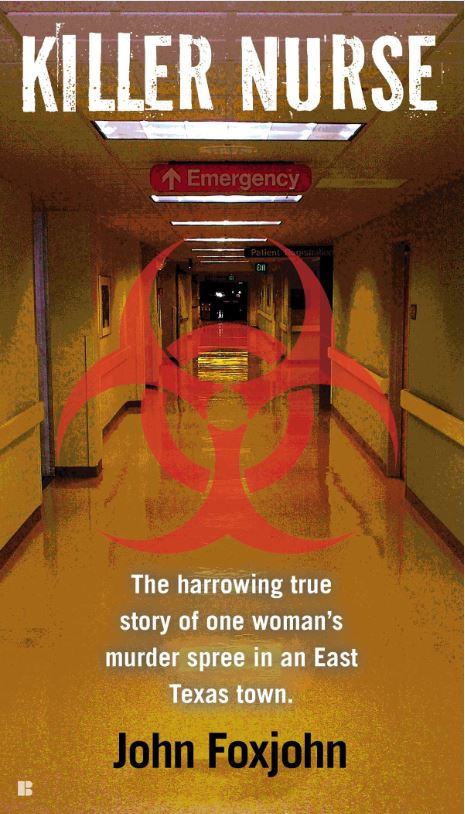
Author of Killer Nurse

I got involved in the Kimberly Clark Saenz (pronounced Signs) case in early 2008 when the Angelina County, Texas, district attorney charged her with capital murder and sought the death penalty. As a former homicide detective, I recognized the magnitude and scope of what would take place. Never in our history had anyone been accused, charged, and convicted of murder with bleach as the weapon.

But that wasn’t the only huge circumstance involved with Saenz. If convicted, she would be a serial killer. This is a rare distinction for a woman, but serial killers don’t happen in East Texas—male or female.


It would take three years for the case to come to trial, and in many ways, my hands were tied beforehand. I was able to talk to a lot of fringe people who knew Saenz. I even interviewed the judge who would oversee the case, but the interview consisted of background information on him—nothing to do with the case. I even interviewed one of the assistant DA’s, but he wasn’t involved in the case. He gave me some really good information on the death penalty and all aspects of it. These were issues that I would need to know for the book but weren’t part of the case.


However, I wasn’t able to speak to anyone directly involved. First, the judge imposed a gag order until the trial was over, and of course the defense attorney was advising everyone not to talk.


During the three weeks of voir dire (jury selection) and the four weeks of trial I spoke to Kimberly Clark Saenz and her family several times—not about the case, just regular talk. The only thing I did was mention that I would like to interview them when the trial was over—either way.


They asked me what I was going to write and I told them I didn’t know—which was the truth—I couldn’t know without a trial and a verdict. I was actually one of the few unbiased people that watched the trial.

Things really heated up after the trial and her conviction. I had a contract with Berkley/Penguin—now Penguin/Random House, and I had to have the completed manuscript in on August 1, 2012. Along with that, I had to send in between 12-20 pictures and all the permission forms to go with them.


The trial ended in May, and of course I had not interviewed a single person who was vital to the case.


Although I had never written a true crime, as a homicide detective I had interviewed thousands of people. Veteran cops learn early on that timing and setup of an interview is important. I began working on this in voir dire. First I knew that they couldn’t talk to me, so when I first met them, I said, “I know you can’t talk to me now and I won’t even try, but I would love to interview you when it is over.”


They respected this—especially as the process continued, and I lived up to my word. They also saw that I went the extra mile to find out the truth—something a lot of the journalists that covered the trial didn’t do.


In the end, I had incredible cooperation from a majority of the people involved. The prosecution was made up of two other attorneys besides the DA. I interviewed the DA four times as well as the others. Everyone in the police department cooperated and one of the defense attorneys sat down and talked to me for hours with the recorder rolling.


Everyone cooperated except the Saenz family. They refused to talk to me because they decided that I would not write the truth—that being that she was innocent and the court and jury had got it wrong. They never asked—just assumed that I wouldn’t do this—but I have to say that this was a correct assumption.


In many ways I respected their decision and even expected it. Their wife, daughter, mother, niece, or cousin was just convicted of five murders and three attempts. What I didn’t expect was them, especially the husband, using Facebook and other venues to discourage people from talking to me.


Obviously, this got the hackles rising on the back of my neck. It was almost as if they were afraid I would find out something. 


One of the most important facts I eventually found out was the husband was an ex-con. He’d been arrested in Houston for two different felonies: one for theft greater than $750.00 but less than $20,000, and the other for felony possession of five pounds of marijuana. If you don’t know how much that is, it is enough to fill a metal office waste can to overflowing.


Now why would they not want this information to get out? Maybe it had to do with the fact that the husband worked for the Angelina County appraisal district as an appraiser.


This is the type of information that is only found if someone is motivated to look. He went from not being a real part of the book to his mug shot being featured in the photo section in the book.


If they’d have just left it alone I would never have delved as deep as I did. Now the entire world knows that Angelina County has an ex-con evaluating their property.


*******************

Best-selling author John Foxjohn epitomizes the phrase "been there—done that." Born and raised in the rural East Texas town of Nacogdoches, he quit high school and joined the Army at seventeen. Viet Nam veteran, Army Airborne Ranger, policeman and homicide detective, retired teacher and coach, now he is a multi-published author.
Website:http://www.johnfoxjohnhome.com
Facebook author page link: https://www.facebook.com/john.foxjohn
Twitter link: https://twitter.com/johnfoxjohn
Killer Nurse: http://amzn.to/151K0Qd

Wednesday, July 24, 2013

What do hybrid authors want?


by Sandra Parshall

Hybrid seems the way for writers to go these days, and I’ll admit I feel like a dinosaur because I haven’t made the jump yet.

A hybrid author is one who publishes traditionally  but has also self-published original work. Some, like Amanda Hocking, became successful by self-publishing after traditional publishing houses rejected their work, then used their solo success to secure lucrative traditional book deals. Others, like the phenomenal Sylvia Day, started in traditional publishing, moved to self-publishing, and now does both.

Hybrid authors are savvy about both types of publishing, and many have negative opinions of print publishers. They know what their choices are, and the most successful among them are skilled at marketing. They tend to make more money — often far more — from self-publishing than from their traditionally produced and marketed books.

So why are they still willing to take the print route with some of their work, and what does a traditional publisher have to do to hold onto them?

A new Digital Book World/Writer’s Digest report offers insights that might make traditional publishers more than a little nervous. The report, for sale through the DBW website, is the result of a 20-question survey of 121 successful hybrid authors, followed up by 17 in-depth interviews. Although I can’t quote from it directly, I’ll summarize it, and you can decide whether you want to pay to read it in full.

The major complaints about print publishers won’t surprise anybody:
*Writers are not respected as partners in the process.
*The author has virtually no creative control. The person who spent a year or more pouring her/his heart and soul into writing the book loses control of it when a publisher takes over.
*Communication between publisher and writer is poor.
*Getting a book to market takes too long (a year, 18 months, or more is typical).
*Royalties for the writer, including digital edition royalties, are too low.
*Few books receive marketing support and promotion.
*Publishers are afraid to take chances on new writers and fresh ideas.
*Publishers claim all rights and hold onto them for many years, cutting off the possibility of additional income for the author. (Writers cheered when Hugh Howey, author of the e-book phenomenon known as Wool, sold Simon & Schuster the U.S. print rights only and held onto everything else.)

Writers recognize that traditional publishing has some benefits. A printed book from a reputable publisher remains a more prestigious product and is easier to get into bookstores and libraries. Major publishers can distribute a book widely (although many small publishers can’t get their books into stores and rely mainly on library and internet sales). Traditionally published books are reviewed in industry periodicals. All the tedium of production is handled by the publisher.

However, the lack of adequate marketing support from their print publishers is a major sore point for authors. The books that are expected to become bestsellers are heavily promoted, but beyond the mailing of review copies, promotion for the great majority of books is left entirely to the authors. If a book doesn’t sell, the writer is held responsible and may be dropped by the publisher.

Creative control was by far the biggest factor cited when the surveyed authors were asked why they want to self-publish their next books. Ease and speed of the process was second, and money came in a distant third.

A side note: Established writers I know personally or online through writers’ groups are enthusiastic about reclaiming the rights to their out-of-print novels and self-publishing them. Some have had to fight to wrest their rights from publishers that want to hold onto them and put out their own e-book editions. Writers love the freedom of being able to redesign a book and give it a fresh and often more attractive cover. (Covers are usually designed by people who have not read the books, and authors have little or no input. Sometimes a great cover results, sometimes not. Ask any group of writers if they’ve ever had a cover so bad that it embarrassed them, and the floodgates will open.)

Many excellent, inexpensive services now exist for preparing e-books for publication and designing covers. The DBW/WD survey also delved into the reasons why writers choose one service over another and what additions  they would like to see, such as distribution of printed copies, establishment of major awards for self-published books, and marketing services.

The surveyed authors were also asked about the role, if any, agents play in their careers. Many say they no longer use agents, or have never used them. Some agents have created side businesses for handling the e-book publication of clients’ works, and some have set up their own e-publishing companies (violating the bylaws of the Association of Author’s Representatives). The overwhelming majority of authors, though, feel an agent is no longer necessary. If they need someone to negotiate a print contract for them, they would rather pay a lawyer a one-time fee than commit to paying an agency’s commission forever.

One part of the report, an enlightening interview with Romance Writers of America president Sylvia Day, is available free on the Digital Book World website. Day says she started self-publishing because she was dissatisfied with the way traditional publishing works — the slowness of it, the low royalties, the paychecks that arrived only twice a year. She says she can live comfortably on her self-publishing income. When traditional publishing companies in the U.S. and abroad wanted her sensational Crossfire e-book series, she hired a new agent to make sure she got the advance and royalty she wanted from Penguin, plus some control of the packaging and pricing. She says it took a month for Penguin’s representatives to “wrap their heads around the notion” that they weren’t competing with another publisher but with Day’s self-publishing experience. In the end, agreement was reached on a print deal.

Day believes the world needs the publishing industry, but she still loves self-publishing. The main reason: Readers are entirely in control, choosing the books that will be successful, without publishers telling them what they should be reading. A lot of successful self-published books, she points out, were rejected by numerous publishers who believed they would never find an audience.

Saturday, May 4, 2013

Living in the Past with Suzanne Adair


Interviewed by Sandra Parshall

The novels of award-winning mystery/suspense author Suzanne Adair transport readers to the Southern theater of the Revolutionary War, where she brings historic towns, battles, and people to life. She fuels her creativity with Revolutionary War reenacting and visits to historic sites. When she’s not writing, she enjoys cooking, dancing, hiking, and spending time with her family. A Hostage to Heritage, her second Michael Stoddard American Revolution thriller, was released in April. 

Would you give us a brief summary of A Hostage to Heritage?

A Hostage to Heritage is the second of my historical thrillers set in
Wilmington, North Carolina during the American Revolution, with redcoat Michael Stoddard as the criminal investigator. The story picks up just a few weeks after Michael’s first chronicled adventure, Regulated for Murder.

Here’s the description from the back cover:


A boy kidnapped for ransom. And a madman who didn't bargain on Michael Stoddard's tenacity.

Spring 1781. The American Revolution enters its seventh grueling year. In Wilmington, North Carolina, redcoat investigator Lieutenant Michael Stoddard expects to round up two miscreants before Lord Cornwallis's army arrives for supplies. But his quarries' trail crosses with that of a criminal who has abducted a high-profile English heir. Michael's efforts to track down the boy plunge him into a twilight of terror from radical insurrectionists, whiskey smugglers, and snarled secrets out of his own past in Yorkshire.

What kind of man is Michael Stoddard? What do you consider his greatest strengths and greatest weaknesses?

For those who enjoy mashup descriptions, Michael is Bernard Cornwell's Richard Sharpe (but more polished) + Martin Freedman's Dr. Watson + Daniel Boone. And perhaps a pinch of Jim Butcher's Harry Dresden, without the magic.

So he’s moral without being priggish, intelligent, curious, courageous, and pragmatic. His greatest strength lies in his ability to see the big picture and not fixate on absolutes. So Michael sees the gray, not just the black and white. His greatest weakness? The compartmentalization he’s made of his emotions, mostly to deal with the horrors of war. He finds it difficult to speak his emotions.

After focusing on female leads in your first three books, why did you switch to writing about a male protagonist – and why a redcoat instead of an American?

Accounts you’ve read from the Revolutionary War are mostly written by American soldiers or the upper class. This means that we’ve seldom heard from Jane and Joe Average Colonist—small merchants, artisans, farmers—about the effect of the war on their lives. Demographically many people of the non-slave population were in this class. I realized that if I wrote about these people, a story of the American Revolution would emerge that wasn’t glorious or glamorous, but it would likely reflect the experience that most of our ancestors in the colonies had lived through.

So I wrote three books from a point of view under-represented in fiction: that of a middle-class colonial woman. Each of these women had a different journey, but they shared some messages in common. Danger and scarcity shaped their decisions and values. They weren’t fragile damsels or angels of the home, thus they used the innate strengths possessed by women throughout history to keep themselves alive and safe. And their narratives bore no resemblance to the stories in romance novels.


While I was writing the third book, I realized that there was another point of view under-represented in fiction about the American Revolution. Michael Stoddard, a young redcoat officer who's competent at criminal investigation, appears as a minor character in my first three books. It was time to let him tell his story.

I've developed Michael to show this world conflict from the supposed “loser’s” point of view. Michael challenges misconceptions Americans have of redcoats during the War of Independence. If the decisions and actions of those redcoats look familiar, it’s no coincidence. History repeats itself.

Do characters from your previous books appear in the Michael Stoddard novels?

Yes. I have a large cast to draw from. If it’s appropriate, characters from earlier books do show up. Readers comment that it’s like seeing old friends again. Since the party can get confusing with so many old friends, I’ve included a Dramatis Personae with A Hostage to Heritage and will add one to previous books. At the same time, I strive to write each book as standalone. A reader new to my series could pick up A Hostage to Heritage and navigate all the relationships while being intrigued (but not confused) by hints of what came before.

What sparked your interest in history? Did you have a great teacher, or were your parents history buffs? When did you focus on the American Revolution as your special interest, and why did you decide to explore the southern theater of the war in depth?


History class bored me—too much rote memorization—and neither of my parents was a history geek. But while growing up in south Florida, I heard too much of the mistaken notion that Florida’s history started with railroad barons Flagler and Plant in the late-nineteenth and early twentieth century. There was too little emphasis on St. Augustine, colonized by Spaniards decades before the English colonized Jamestown and, especially with its fort, an important holding for King George III during the American Revolution. I wished for a way to put Florida on the history map accurately. 

Castillo de San Marcos

I had always felt more affinity for the Revolutionary War than the Civil War, perhaps because so many folks from the north were living in the area of Florida where I was born and raised. In 1999, while I was living in Atlanta (and inundated with Scarlett O’Hara), I visited St. Simon’s Island in Georgia. There I found that Georgia, as the thirteenth colony, had a colonial past that was alive. I wandered the ruins of Ft. Frederica (artist’s rendering shows historical layout) and wondered why nobody had ever written an adventure set in Revolutionary War Georgia and Florida. Why did everyone focus on the northern theater when so much of significance happened in the southern theater?


Four months later, I was writing that adventure. It became Paper Woman and won the Patrick D. Smith Literature Award from the Florida Historical Society. I’d done my part at putting Florida on the history map accurately.

Most recorded history of the era seems to be about the leaders, the founding fathers and military leaders like Washington. How much material is available about the lives of ordinary men and women at that time? What did you come across that was particularly helpful in dramatizing the lives of common people caught up in the revolution?

What we know of the lives of ordinary people comes from personal information, such as letters and Bible records, and people’s records for business, home, and legal actions, as well as newspapers. Suppose an apothecary’s wife kept a transaction of household goods that she and her husband had to purchase or trade. (Most daughters of merchants, artisans, and farmers during the Revolution were taught to read and write and do basic math so they could help their husbands.) In the margin of the transaction record, the wife might jot down a recipe for blackberry cobbler. She might note if their kitchen building had burned, or a neighbor’s goats got into her garden and ate her cabbages. What you wouldn’t see in ordinary folks’ transactions records are entries for the purchase of bolts of expensive fabrics for ball gowns and crates of fine wine.

With the exceptions of New York, Boston, Philadelphia, and Charleston, towns weren’t large enough to shelter residents from the depredations of passing military units. People living in the hinterland were particularly vulnerable to military movement through their areas and might be killed when armies marched through. Armies offered them more protection than towns. Thus these folks often joined the ranks of those civilians who followed armies, just to save their lives.
 

Many Revolutionary War reenacting units include a camp follower contingent. At weekend events, these folks set up living history demonstrations to show the public ways in which merchants, artisans, and retainers who accompanied an army interacted with soldiers and did their best to add normalcy to their lives. Some of these demonstrations include a hands-on component for the public. Of course, if you’re a reenactor, the entire weekend event is hands-on history. These hands-on activities have given me a clearer understanding of the challenges faced by my ancestors than the information I’ve found in books.
 

How do you find the voices of your historical characters? Most written materials, including personal letters, seem stiff and unnatural. Surely people didn’t speak that way in everyday conversation – but how do you know what their speech was really like? Have you found sources of slang or casual speech of the time?

No one today talks the way they write, so it’s reasonable to assume that this has always been the case historically. We don’t know for sure what the speech of anyone was like before technology enabled us to record voices. We can only make reasonable guesses.

We have written records of quite a bit of slang used during the Revolution. Slang has been part of human language forever. Where my reader audience can understand an eighteenth-century slang term from context, I’ll use it, if the use is appropriate. I avoid modern slang but stick to modern speech rhythms. This middle ground is used by many writers of historicals. Dialog that sounds too modern or too archaic will yank most readers out of the story. We don’t want that to happen.

Here’s a brief essay I wrote in 2010 about crafting speech for my Revolutionary characters. In it, I discuss how I questioned readers to find out what kind of dialog they found most natural in historical novels:

How often do you participate in historical re-enactments, and what roles do you play? Do you wear historically accurate clothing – including the underwear? Is it comfortable? Can we assume the clothing of women who were camp followers wasn’t as restrictive as stylish women’s clothes?

Before I was published, I attended a reenactment or living history event about once a month. Now I’m so busy with writing that I attend perhaps three per year. I always portray a retainer—along with sutlers and artisans, one of the types of non-combatants (modern term: camp follower) associated with an army.


I wear historically accurate clothing. A middle-class woman traveling with an army stayed in the company of a male relative such as her husband, father, or brother. She’d likely wear the following ensemble: a shift (the underwear), petticoat, short, boned jacket, apron, mobcap, stockings, and shoes. If she didn’t expect to lend a hand with cooking, hospital duty, laundering, or sewing, she might wear stays and a long gown, and big panniers. The short, boned jacket allowed a woman’s upper torso more flexibility than stays with a long gown, so yes, it wasn’t as restrictive.

Is it comfortable? Hah! In the summer, it’s hot as the dickens, and sweat plasters the shift to my legs. No one can run very quickly in the clothing. If it gets wet in a downpour, all those yards of fabric become quite heavy. And sometimes the wind can whip the petticoat into an open campfire, setting the material afire. Every year, that happens to a few reenactor women. I had my petticoat whipped into the flames once, but we grabbed it out before it caught fire. In the eighteenth century, being burned was one of the top causes of death for women.

Have you fired the weapons used in the war? What other research have you done in order to write accurately about the lives of men on the battlefield?

I’ve loaded and fired both a musket and a pistol with powder, the way it’s done during the battle reenactments. I’ve also fixed a bayonet on the business end of a musket and received lessons in swinging a saber. On one occasion, we went way out in the woods away from people so I could load and fire a musket ball and get an idea of the difference in the recoil between that and a musket fired with powder alone. The musket ball hit a pine tree at what would have been chest height on an adult. I swaggered for a few seconds before I realized that the ball had ricocheted somewhere, just as it might have done in a battle. One of us could have been killed by that. I haven’t fired any musket balls since then.

I learned to start a fire with flint and steel. (What an exercise in hyperventilation. Matches weren’t invented until the nineteenth century.) My hat’s off to my ancestors who could start a fire with flint and steel in the wind or rain.


I’ve cooked over many wood fires (and burned plenty of food that way), slept in canvas army tents without mosquito netting, and gone without running water and heat/AC for entire weekends. Refrigerators, electricity, and flush toilets seem like miracles after those weekends.

During the after-hours at many weekend reenactments, there’s a social event that usually involves dancing to fiddle music. Most soldiers would have participated in such entertainment. It was another way to inject normalcy into their lives. Many steps in these country dances (do-si-do, swing, allemande, etc.) are used in modern square dances and contra dances.

Where can people go to get the flavor of the time in homes and towns, away from the battlefield? Which historical sites have you most enjoyed visiting?

Sites like Colonial Williamsburg and the Joel Lane Museum House aren’t associated with any battle reenactments, although activities connected with these sites might occasionally include a military drill. These sites are great places to get a sense of the eighteenth century on the scale of a town, nobleman’s estate, or homestead of an ordinary person. Full-time employees provide the living history element.

Other sites such as Historic Brattonsville, House in the Horseshoe, and Historic Camden provide visitors with the sense of eighteenth-century homesteads and lifestyles while hosting annual battle reenactments. There aren’t as many regular employees providing the living history at these sites. Reenactors do a lot of the hands-on history at the annual events.

Each site I’ve visited has its own charm. The immense scope of what’s available to people who are in search of living history—from entire town to farm, from mansion to small home—reinforces the fact that war knows no boundaries.

Many – most? – students find history dull and irrelevant to their lives. Do you have any suggestions for teachers (or parents) who want to get kids excited about history and make them understand the events that created our country?

Make history as hands-on as possible.

When I became involved in Revolutionary War reenacting, my sons were in early elementary school. I brought them into the reenacting with me. Even though I could see how much they enjoyed themselves at every event, I had no idea that all that hands-on involvement would give both of them an appreciation of history from many time periods.


I also had no idea that participating with Crown forces reenactors all those years would help my sons understand that there are at least two sides to every argument, and that in military actions, the soldiers on neither side consider themselves to be the villains. Showing history, rather than telling it, makes the past relevant, fun, and worthy of study.

Thank you for the interview, Sandy!

Visit Suzanne's website at http://www.SuzanneAdair.com for more information.

Wednesday, May 1, 2013

A Bailout for Publishing? Seriously?


by Sandra Parshall

James Patterson is right when he complains that all the talk about publishing these days is negative, focused on the industry’s decline without offering any solutions. But is he really proposing a government bailout?

Last week Patterson placed an ad in Kirkus Reviews and The New York Times Book Review, and on both covers of Publishers Weekly, asking “Who will save our books? Our bookstores? Our libraries?” The ad read in part: "The Federal Government has stepped in to save banks, and the automobile industry, but where are they on the important subject of books? Why are there no impassioned editorials in influential newspapers or magazines?"

The four-page PW ad lists 46 novels and nonfiction books under these questions:
“What will happen to American literature?”
“Who will publish important books like these?”
“Who will help save America’s books?”
“Who will mentor and encourage our authors in the future?”
“Who will recommend books like these to the American public?”

Most of the fiction titles he lists as representative of America’s best are literary novels or modern classics by Hemingway, Faulkner, Harper Lee, etc., but he also includes books by Thomas Harris and James M. Cain.

The world’s bestselling thriller writer may not produce books that could be called “literature” but he is a passionate advocate of reading who has donated thousands of books to U.S. troops stationed abroad, founded a program that encourages children to read, and given time and money to literacy programs. He told PW in an interview that he hoped his ads would turn the discussion of publishing’s survival in a more practical direction. Currently, he said, publishers are in a “Woe is me” rut and the media produce the same “publishing is in trouble” story over and over. He urged publishers to “Get in attack mode.”

Exactly where that attack would be aimed is unclear. PW senior writer Andrew Albanese said in response to Patterson’s ads that “The book is changing, for sure. And reading is under pressure,” but whether “the book” is endangered is debatable.

Patterson’s ad doesn’t mention the phenomenal rise of the e-book, although it’s impossible to discuss traditional publishing’s decline without naming the main cause of it. The figures tell the obvious story: as digital sales continue to rise, print sales continue to drop. But there’s a lot more to it than simple sales numbers.

Some writers are so disgusted with traditional publishing that they would love to drive a stake through its heart, and they think all writers should jump at the chance to take control and self-publish. However, we’re seeing more and more successful self-published writers accepting offers from traditional imprints and happily turning over all the grunt work of publishing to professional editors and marketing departments. Many traditionally published writers might dabble in self-publishing but would never give up the very real advantages of bringing out their books the old-fashioned way. As long as traditional publishing attracts talented writers, including those who start by self-publishing, it will stay alive.

Everybody seems to agree on one thing, though: traditional publishing has to change, perhaps drastically, and adapt to the new realities of the book world. Unfortunately, nobody appears to know how it should change. Merely adding digital departments to process e-books doesn’t look like the answer, when so many other aspects of the business are outdated and writers and readers alike are unhappy with everything from pricing to marketing to the often poor quality of the product.

Will the federal government step in and bail out publishing? Not likely. Publishing is a comparatively small industry. If it failed completely, it wouldn’t bring down the economy, and the economic impact is all Congress cares about. However, local communities and states have a duty to keep public libraries open and provide funding to pay staff and keep both print and digital collections up to date. That is a use of public money that benefits everyone, but library funds are among the first to be cut when communities are faced with deficits.

The good news is the “the book” is alive and well. It's not always in the form of pages between two covers, but it isn’t about to vanish. Many owners of e-readers report that they are reading more than ever because digital books are less expensive than print and can be purchased in seconds. Book discussion communities are thriving online, and face-to-face book clubs are more popular than ever. Readers will find the books they like, regardless of how they're published. Patterson asks: Who will recommend good books to the public? The answer: Other readers will. Favorable word of mouth has always been the best way to sell a book.

Avid readers and book-buyers have never been in the majority – writers realize that the market for our products is small compared to that for pop songs or action movies – but they are passionate about the written word. As long as readers love to read and writers feel compelled to write, “the book” – in whatever form it might take – will live on.


Thursday, April 25, 2013

Those Golden Age Detectives


Elizabeth Zelvin

In the Golden Age of detective fiction, several British mystery writers, all women, reigned more or less co-supreme: Agatha Christie, Dorothy L. Sayers, Margery Allingham, and, writing a bit later, New Zealand-born Ngaio Marsh.

Let’s take Christie first and get her out of the way, because her mysteries differ from those of the others in several respects. For one thing, the world she portrays is rather middlebrow. Hercule Poirot, one of her enduring detectives, is an eccentric Belgian, played for laughs, who stands outside the parade of English society. He has no personal life and no genuine emotions apart from a mild compassion for some of the victims of the crimes he solves and an occasional burst of vanity. The other, that unlikely sleuth, Miss Marple, is a middle-class resident of a village in which society consists of such stock characters as the vicar, the doctor and the squire—hardly elevated enough to be invited to dinner, say, at Downton Abbey, unless no other company is expected.

In Christie’s mysteries, the puzzle is all. If her plots seem clichéd to today’s readers, it’s because the twists that were fresh and original in her work have spawned so many imitators. I doubt that anyone would call her stories character driven. The Poirot and Miss Marple series have no arc; their characters are unchanging and eternal.

On the other hand, Sayers’s Lord Peter Wimsey, Margery Allingham’s Albert Campion, and Marsh’s Detective Chief Inspector (later Superintendent and Chief Superintendent) Roderick Alleyn have a lot in common. Lord Peter is the brother of the Duke of Devon; Campion is the pseudonymous scion of a family of unnamed but elevated rank, perhaps a ducal younger son himself. Alleyn is the younger brother of a rather stuffy baronet, Sir George. All of them mingle freely with characters across a broad spectrum of society. None of them are snobs in the conventional sense. Yet inherent in the value system and lifestyle of all three is the peculiarly English concept of being “a gentleman.”

At its best, being a gentleman implies unassailable integrity, and that, certainly, is common to all three sleuths. A sense of chivalry and/or noblesse oblige (without hairsplitting over the difference) is deeply ingrained in them by their upbringing. They solve crimes to right wrongs—as well as, in the case of Campion and Lord Peter, because it’s fun.

However, these sleuthing gentlemen take for granted an entitlement based on class. As today’s viewers of Downton Abbey are constantly reminded, traditional British class structure took some direct hits during World War I and crumbled gently thereafter during the decades in which our detectives operated. But gentlemen still knew who they were and recognized the boundaries between their class and others’. In Downton Abbey, Bates was Lord Grantham’s batman in the War, as Bunter was Lord Peter’s. In civilian life, the lords expect to be dressed, groomed, and waited on, and the intelligent and loyal far-more-than-valets cheerfully provide these services. Campion’s “man,” the cheerfully irreverent Cockney ex-burglar Lugg, is similarly both servant and sidekick. Instead of a devoted lifelong servant, Alleyn has Detective Sergeant (later Inspector) Fox.

Class distinctions carry over from the detectives’ private life to their investigations. When a murder is committed, the gentleman sleuths interview the gentry, while Fox, Lugg, and Bunter make themselves at home in the servants’ hall, chatting up the cook, the butler, and the whole roster down to the youngest tweeny, speaking the vernacular over cozy cups of tea.

In spite of these iconic characteristics, all three of these great detectives demonstrate personal growth in the course of the series—Lord Peter the most, as he evolves from silly-ass-about-town in the early books to a character of such depth, complexity, and sensitivity that it is widely believed that his creator, Sayers herself, fell in love with him.

All find partners outside the rigid social boundaries of birth. Alleyn marries Troy, an acclaimed artist; Lord Peter, a mystery writer, a doctor’s daughter he first meets when she is on trial for murder; and Campion, Lady Amanda Fitton, an aristocrat, to be sure, but one who is happiest messing about with airplanes as an aeronautics expert. Their marriages draw all three sleuths into a growing maturity that lifts their investigations far above the realm of mere puzzle.

Tuesday, March 12, 2013

Author Needs Information


Sharon Wildwind

Most people love to talk about what they do, which is a good thing because, as authors, we’re likely to need information all the way through the alphabet from archeologists to zoo keepers, with a heavy emphasis on first responders—police, firefighters, emergency medical technicians—and people throughout the justice system.

E-mail Requests
It’s a Google/e-mail/linked world out there. I’m a big fan of using e-mail exchanges in place of in-person interviews. Having an e-mail conversation gives the person being interviewed more freedom as to when and how to answer questions.

Often reaching an expert is as simple as looking up contact information on their web site and sending an e-mail. The subject line I use is Writer Needs Information. I send a short message saying that for my current work in progress I need information about raising ducks and geese, the prison system in Tennessee, how an arson investigation is conducted or whatever my particular bugbear is at the moment. Would they be willing to answer a few question via e-mail?

Under my signature I put my a link to my website. If they have any question that I’m on the up and up, they can always go to my website to check me out.

I’ve found university faculty to be wonderful, often overlooked, resources. Administrative Assistants are as helpful as resource librarians. I’ve written many e-mails to AAs, explaining what I need and asking them to forward the message to whomever in their department might be knowledgable in that area.

Sometimes nothing beats talking to people face-to-face.

In-Person Interviews
Save time by going to the right person. Call or e-mail first to find out the name and address of the best person to contact to request an interview.

Write them a letter or e-mail asking three to five specific questions. Avoid shotgun phrases like “I don’t know anything about archeology, and I’m hoping you can tell me everything you know.”

At the end of the letter, ask for an 30-minute interview. Some interviews pan out, some don’t. You’ll know in 30 minutes if you’ve found a gold mine or not. If you’ve hit the mother load, ask for a second, longer interview. Keep in mind that many of the people you interview get paid, sometimes big bucks, for sharing their time, so even a 30-minute interview is a gift.

Establish a clear understanding of protocol. At the beginning of the interview, ask if it is all right to record the conversation. Ask if you need to get permission from anyone to use the material that will be discussed; and, if you do, how do you get that permission?

Avoid giving your interviewee a plot summary or a lengthy discussion about the characters you love. They are technical consultants, not editors. It’s okay to lay out a simple overview, such as, “An FBI agent is found dead in a downtown hotel. The office he works out of is in another state; he was on vacation at the time he died. Whose responsibility is it to investigate his death, the local police or the FBI?”

Avoid putting the person on the spot with questions like, “Do you think my plot will work?” You’re the author, you’ll make it work. What you really want to know is “If this happened in real life, what would your response be?”

When you’re fortunate enough to find an interested person, build on the relationship. What can they do for you? More interviews. A tour of where they work. Opening doors for you, like arranging for you to see something the public usually doesn’t see. E-mail correspondence. Reading some chapters for accuracy. Recommending books, journals, web sites that might be helpful. A good contact can do this and more.

What can you do for them? Give them a chance to explain how challenging and interesting their work is. Let them tell their stories. Value their contributions.

After the interviews
Send a thank-you note. As the book progresses, send an occasional a follow-up note or e-mail to let the person know how the writing is going. If you decide to not go ahead with the book, let them know this, too, and thank them for what they contributed to the project.

Include them in the book’s acknowledgments. Ask if they wish to be mentioned by name or not. If they made a significant contribution, send them a copy of the book when it come out.

Above all, keep a grateful heart. One of the perks of writing is the wonderful people who help us along the way.

Quote for the week

The way I work, the interview never becomes larger than the person being interviewed.
~Ken Burns, American director and documentary film producer

This just in: the Edgar Allen Poe Cake
For more literary theme cakes, click here.