

 Posts


Sandra Parshall
I opened the latest Writer’s Digest and saw this header on the editor’s column: You Are What You Write.
Now there’s a scary thought. Makes me very glad Thomas Harris doesn’t live next door.
But is it true? If someone writes about murder, intrigue and deceit, what does that say about him or her as a person? If you attend a mystery conference, will you find the hallways crowded with weirdos, their eyes glittering maniacally as they contemplate killing off the competition?
Sorry to disappoint you, but no. Mystery writers are some of the friendliest, most down to earth people I’ve ever met, and I wouldn’t be afraid to encounter any of them in a dark alley. The majority of authors at the conferences I’ve attended have been middle-aged (or older) women, nicely dressed, well-groomed, and resoundingly normal in their behavior. When they start talking about their work, though, you realize these aren’t ordinary folks. They can describe myriad ways to kill other human beings. They know what acid will do to your eyes and what insecticide will do to your liver. They can tell you how long it will take for rigor mortis to set in after you die, and how long it will take flies to discover your corpse. They can happily chat about such matters over soup and salad, without the slightest sign of queasiness.
Does this fascination with murder mean the writer is capable of committing the acts she allows her characters to perform? In my own case, at least, the answer is no. I’m such a wimp that I would probably have trouble acting in self-defense, and I can’t imagine killing another person for any reason. I’m basically a pacifist, and I’m always shocked when someone chooses murder over divorce or a lawsuit. I find it mind-boggling that anybody could kill a neighbor over a property line dispute or an estranged spouse over a financial disagreement. I write crime fiction precisely because those extreme actions baffle me. I want to understand the emotions and thoughts of people who overstep the boundaries of accepted behavior even though their problems appear fixable to onlookers. And I like knowing that in the end, whatever the killer’s motive, I can decide what the punishment will be.
Maybe all that sounds too high-minded. Maybe it doesn’t explain how I can become immersed in a book or article about the different ways a human body decomposes under various conditions. Not all mystery writers can stomach the graphic stuff, and when they write about corpses they use vague, general terms that won’t turn anybody’s stomach, including their own. Many writers are aiming for an audience that enjoys the puzzle but doesn’t want to dwell on the physical act of killing and its aftermath. To me, though, murder is a serious business, and I want the reader to feel the reality of it, to see the victim as an individual whose life has been wrongly taken. Sometimes that requires describing the sights and smells of death.
I do have a morbid side -- my friend Alex Sokoloff flattered me by calling it my “simmering dark streak” -- and that side is reflected in my writing. But a writer’s nature, like anyone else’s, has many facets. I would describe myself, first of all, as someone who loves nature and animals, so I do have that much in common with one of my characters, veterinarian Rachel Goddard. My life isn't filled with high drama and intrigue, however, and I don't want it to be. I would have been happy living in a forest with only animals around me. But as it turned out, I’ve spent my life primarily in the company of humans, and I’ve chosen to write about the worst acts humans can commit. That isn’t me, though. I am not what I write.
Wednesday, March 7, 2007


Monday, March 5, 2007
Time Travel...
Lonnie Cruse
I've always been fascinated by the concept of time travel. Travel to the past, but not to the future, that is. I'd rather NOT know what's ahead for me or the rest of the world. But I'd love to go back and spend a day or two in my own past, (when my kids were little) or spend time with my parents, both of whom died when I was young. Or maybe I'd spend time with a famous character in history, like Abe Lincoln.
Time machines aren't my thing, I feel like they'd be jarring to my nerves and probably muss my hair. My thought is, the key would be old photographs. Entering the past by entering the photo of a past event. And, no, I don't have a clue how I'd do it. I just like the concept. I'd love to be able to interact with people from the past without changing events or harming history. Just spending time there, seeing what it was like.
But supposing I went to the past and found out something negative about my parents or someone else I cared about? Secret adulterer, serial killer, bank embezzler? What then? Interesting thought. Might make an interesting novel to write.
What if I found out a famous, much admired historical figure was a total fake? Didn't do anything history claimed? (Think George Washington's cherry tree, which fable I believe HAS been debunked.) Would I tell anyone what I'd discovered, or keep it to myself? And if I DID tell, would anyone even believe me? Who knows?
Where would you travel to and who would you meet, IF you could travel anywhere in history? Or to the future, if you are braver than me?
Somewhere In Time is one of my favorite time travel movies, though I did think the story got a little twisted at the end. (I mean, who started the whole thing, her or him? Meaning where did the watch come from, since she said it wasn't hers, but she gave it to him? Did I miss something?)
Now, what should I take along with me on my first trip into the past? Wonder what Poe is doing for lunch today? First I'll have to find a picture of him on the net. Excuse me, I've got to go pack.
Saturday, March 3, 2007
Uninhibited Mentors

June Shaw
Mom couldn’t see or hear well, but at her great-niece’s reception heard someone announce that all unmarried women should go up for the bride to toss her bouquet.
“Get me up there,” Mom told me.
I guided her to a spot behind all of the giggly bridesmaids and other friends of the newlyweds. The bride tossed – and the tall young woman in front of Mom caught it – and my ninety-year-old mother reached up and yanked the flowers out of that girl’s hands. The young women all disappeared, and the bride turned.
“Oh, Aunt Nora,” she said. “You caught my bouquet!”
A photographer appeared and snapped pictures for the wedding album of the bride and the woman who “caught” her bouquet, my mom.
Once the photos were done, Mom told me, “Let’s go find out who caught these. I should give them back.”
Oh, really? So why wait until now? I didn’t voice my thoughts, but we found the girl who’d actually caught the flowers and tried to return them.
Her boyfriend told Mom, “Oh no, we don’t want them. You keep them.”
I was relieved. And enchanted. Characters really do unusual actions. Terrific!
Relative Danger, my first in a series of humorous mysteries, was recently published.
“The main character is so much fun. She’s you!” many readers have told me.
Nope. She’s who I want to be – one woman with traits gleaned from some of my uninhibited mentors. My squeeze Bob is another one. He gets everybody in elevators and waiting rooms talking.
Once he came out of his urologist’s examining room and walked through his crowded waiting room and loudly said, “Ooh, he hurt me. He pulled the wrong tooth.”
Later he needed a procedure done at our hospital. His doctor wanted to pull a prank on some nurses there, so he asked Bob if he’d wear a furry pig costume to the hospital and all the way to the operating room. Bob said the nurses all went hog wild over him.
And then there’s my sister-in-law Lois who will say almost anything. Lois will not hold her tongue if she thinks someone has done something wrong that needs correcting. She seldom uses a quiet tone. If she’s in a room, people know it. And there are a few other uninhibited friends I am blessed to have. With all of my terrific mentors, why should I be the uninhibited one? I’m excited enough with being around them and experiencing their antics. And being inspired by each one of them.
You can see more of June and some of her uninhibited mentors at www.juneshaw.com.
Friday, March 2, 2007
What's New With Jane Cleland?
Julia Buckley
Part of this interview with Jane Cleland was printed on Julia's blog a few months ago, but it has now been updated with new material about Jane.
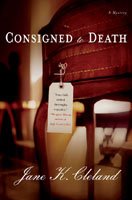
NEWSFLASH: Jane's book, Consigned to Death, is one of those nominated for an Agatha for Best First Novel. Congratulations, Jane!

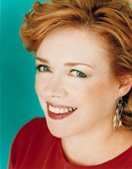
Thanks for agreeing to chat with me, Jane. What's new with you?
Well, my new novel Deadly Appraisal is about to release in hardcover (April 17) and Consigned to Death in paper (April 3)... and if you peek at my website-- www.janecleland.net -- you'll see my tour is now 50+ events and growing... and I've just updated the website (revamped)... roll your mouse over the banner at the top of the home page-- kinda fun! ... also, I've revised the book discussion questions for Book Clubs to include more targeted questions (and martini recipes)... also, for antiques fans we have a new, free promotion called "What's it Worth?" where visitors can try their hands at antiques appraisals and see how their judgment compares to that of the experts at the renowned auction house, Leslie Hindman Auctioneers! Also, I'm the new MWA/NY Chapter president ... and the new chair of the Wolfe Pack's literary awards (we're the folks who award the Nero and the new Black Orchid Novella award in partnership with Alfred Hitchcock mystery magazine).

What does being MWA New York Chapter President entail? Will there be a lot of paperwork? Meet and greets? Will you wear a sash?
Do you know MWA's motto? It's been with us since the beginning -- CRIME DOESN'T PAY -- ENOUGH. Isn't that a hoot?
What do I do as president? There are two aspects of the job: running the local chapter and serving on the National Board. It's a big responsibility. I'm always thinking how I can help our members succeed. As a start, I adhere to the Hippocratic oath: First do no harm. By that I mean that Mystery Writers of America has a 60-year history of success -- I want to help us keep doing what we've always done well -- and help us become even more relevant.
MWA is an educational foundation -- thus, our programming is very important to our success. Locally, we have great speakers--and all of our programs, effective January 2007, are available to our members, for free, as podcasts on our website--www.mwa-ny.org .
Happily, so far at least, the paperwork has been manageable.
One of my roles as president is the delightful task of meeting people and ensuring they feel welcomed by MWA. I write a personal letter to every person who joins MWA/NY. At every MWA/NY meeting, I ask who's new and invite them to stand and introduce themselves. When I attend conferences, visit bookstores, facilitate book club discussions, it is my pleasure to serve as a MWA ambassador.
Sadly, there is no sash.
Your novel, Consigned to Death, is a fun play on words. In one sense, of course, it refers to the antiques business, in which you have some experience. So, having run your own rare book and antiques store, have you ever felt “consigned to death?”
Interesting question... “consigned to death,” as in “shoot me now.” Yes, when I ran my rare books and antiques store... I occasionally felt that way—for instance, when explaining to a customer that “free gift wrap” didn’t include those items she’d purchased elsewhere, or when we foolishly opened on Superbowl Sunday and not one customer came into the store all day. Mostly though, I recall special moments—the delight of discovering a satiny-smooth leather bound book among a box of battered volumes or the look of elation on a collector’s face when he found a treasure in our shop.
You are also, according to your website, an “experienced speaker and meeting facilitator.” How did you develop experience in this area, and how does one facilitate meetings?
There are two theories to training professional speakers: hire a subject matter expert and hope they can communicate effectively or hire a really smart, excellent communicator and teach them the curriculum or subject matter you want them to deliver. I got into the industry more than twenty years ago via the second approach. I sometimes think of myself as the 7-11 of the information business—I’m very adept at distilling complex information into manageable and understandable “data chunks.” I have a behavioral slant, so all my business communications work aims to help people do something better. My clients are blue-chip: I write seminars for the American Management Association (they assign me a subject matter expert); and I develop and facilitate workshops for clients such as Pfizer and PriceWaterhouse Coopers. As to how one facilitates meetings well—well, that’s a huge subject—in fact, I offer a seminar on the topic, so it’s tough to summarize in a sentence or two, but here goes: to facilitate a meeting well, ensure that everyone in the room feels like a million bucks while maintaining an iron grip of control. I’m not being flip—those are the two qualities that excellent facilitators share. There are lots of ways to achieve these seemingly mutually exclusive imperatives, so there’s plenty of room for individual styles and personalities to succeed.
Your book has been tied in with the popular Antiques Roadshow. Do you think this has helped to contribute to its success?
First let me clarify that there is no official “tie-in” with the wonderful program, Antiques Roadshow. I was surprised when the early reviews compared Consigned to Death to the Antiques Roadshow, but, of course, I was thrilled at the comparison. I think Margaret Maron, Kirkus Reviews, and others really nailed an aspect of the book that I hadn’t really latched onto—the intriguing complexity of appraising antiques. I’m new to the writing business—Consigned to Death is my first novel. I think it’s crucial, when you’re a debut author to have a succinct way to describe your book. It helps people understand what they may be getting themselves into by starting it. Therefore, I think it’s useful that I can explain Consigned to Death as: “It’s like an Antiques Roadshow for mystery fans.” I think that’s clear and accurate.
Before writing fiction, you wrote several books on business, including Putting First What Matters Most: Proven Strategies for Success in Work and in Life. Were you a business major?
My undergraduate work was in communications, but my graduate work was in business. I earned an MBA.
How did you come up with the idea for Josie Prescott, your protagonist?
I wrote a mystery featuring a sizzling hot private eye named Tony Barnes who was based in New York City. It received the nicest rejections! Part of the message was that the market wasn’t strong for new series featuring a male private eye based in New York. I took it as a personal challenge and developed a mystery series featuring a female amateur not based in New York. I really love Josie a lot, so I’m thrilled she has come to life!
The nicest rejections--that's funny. But so true.
Since you have a great deal of business experience, are you handling your own public relations?
I’m handling a lot of it, but I have a good friend who’s helping me with some aspects of it, and I also work with an outside service as well—Breakthrough Promotions.
I’m also helping the Wolfe Pack, the fan club of Rex Stout’s Nero Wolfe books, publicize their literary awards. Starting in 2007, I took over as chair of the awards. And I’m very excited to announce that we’re partnering with Alfred Hitchcock Mystery Magazine to offer a new writing award—for best novella! Rules for submission will be posted on www.nerowolfe.org starting in October!
You have a husband and four cats. Are they a part of your business empire?
Sadly, I must report that one of our little cats has died. Very hard. We loved the little guy a lot. As to your question, I wish I had a business empire for them to be part of! I’m just a new author trying to introduce my protagonist, Josie Prescott, to as many people as possible!
You seem like a goal-oriented person. What are your goals for the next few years? Do you have a long-term goal?
I am extremely goal-oriented—and I’m always in a hurry. My goal up until a few months ago was to get a new contract. I did so—so St. Martin’s Minotaur will be publishing Josie’s adventures for years. I’ve completely thrilled!
Other goals—to keep introducing Josie to as many people as possible; to launch the Black Orchid Novella Award in partnership with Alfred Hitchock Mystery Magazine (see www.nerowolfe.org starting in October for details); to ensure that the Nero Award (I’m the chair) maintains its high quality level; to write good books; to serve well on the New York Board of the MWA; and to snorkel a lot.
Long term goal—all of the above, except more so.
You are considered an inspired speech-maker. Have you utilized this in promoting your fiction writing?
Thank you for the nice words! I don’t know about “inspired,” but it’s true that I am an experienced public speaker—all those years delivering seminars and facilitating meetings add up!
To answer your question—I’ve developed two speeches related to the Nazi theme in Consigned to Death—one is called Finding Stolen Art: A Detective Takes on the Nazi and the other is called The Politics of Stolen Art: A Legacy of the Holocaust. I’ve delivered them at Temple Israel in Sharon, Massachusetts—one to the entire congregation, and the other to high school students. They were very well received.
If any of your readers would be interested in learning more about those speeches, or a speech on another topic—such as Growing a Small Business: How to Get the Word Out—I’ll be happy to talk to them about it. They can e-mail me at jane@janecleland.net or call 212.332.9976. I’m very good about responding to e-mail, so if they don’t hear from me within a day or two, that probably means I didn’t get it! Please call!
I’m very interested in speaking at libraries, Rotary Clubs, Chambers of Commerce, and the like.
Because I’ve spent a fair amount of time researching how I can best introduce Josie (my protagonist) to people, and have had some success, I also offer a presentation on: How to Promote Your Book—20 Ideas in 40 Minutes.
Did you always want to write fiction, or is this a new discovery of your creative side?
I sort of knew I wanted to write fiction, but it was a long-sublimated desire.
Will there be more Josie Prescott adventures?
I’m trilled to report—yes! Deadly Appraisal will be published (also by St. Martin’s Minotaur) in April, Lethal Legacy in April 2008, and so on. I have a multi-book contract, so we can expect Josie to have adventures for years to come!
 /
What’s been the most unexpected part of promoting the mystery?
How thrilling it is to meet fans! I knew it would be fun to meet fellow mystery lovers, but I didn’t expect to be brought to tears as fans confide in me how close they felt to Josie because of her strength; or how their dad died, too, so they understood Josie’s struggle to overcome her heart-wrenching grief; or to hear their stories—like Jerry, a fan’s dad who gave her a flashlight when she was a little girl so she could read late into the night without risking her mom’s ire. I feel truly fortunate and grateful.
You encourage people, on your website, to share thoughts about the value of some of their antiques—going beyond the monetary and thinking in terms of emotional value. What sorts of stories have people told you?
One fellow told us about how he and his wife found a painting in the attic just after they married and moved into their first house, and how it still hangs in their living room reminding them of their love—and they’ve been married more than fifty years. A woman told us about her grandmother’s quilt, and how it traced the stories of her life. Very moving.
Jane, when do you find TIME to do all this stuff? Am I talking like a loser? Do I need to buy one of your books to help prioritize my life?
Ah, priorities! Part of why it seems that I accomplish a lot is that I don’t spend time doing things that other people do. For instance, I don’t have children! Another part is personality—I can’t sit still! I like being busy and I like getting things done. Still another part is that I’m a late bloomer and I want to make up for lost time!
See, that's a problem: I can sit still for HOURS.
How can people find out more about Jane Cleland and her fictional creation, Josie Prescott, and the mystery called Consigned to Death?
My website is a good source of information: www.janecleland.net – there’s an excerpt so people can try the book to see if it’s of interest to them, for instance.
I post two BLOGS a month—and starting this month, they’re available as podcasts! I discuss everything from nightmares to characterization through suspense.
The newsletters keep people up to date on what’s going on – like the major change in cover art that will occur when Consigned to Death is released as a paperback—and will be carried over in the branding with Deadly Appraisal. You can see the new covers in an article in newsletter, Vol I, No. 6: http://www.janecleland.net/htm/newsletter/newsltr.htm
I also include an unpublished fact about Josie in every issue of the newsletter--fun! Anyone interested in receiving it via e-mail can sign up on the site.
There are photos of Josie’s world on the site, recipes for all of the dishes mentioned in the book, and loads of other informative and fun content!
I’d love to hear from people. Folks are welcome to e-mail me at jane@janecleland.net or call 212.332.9976. As I mentioned above, I’m very good about responding to e-mail, so if they don’t hear from me within a day or two, that probably means I didn’t get it! Please try again or call!
Part of this interview with Jane Cleland was printed on Julia's blog a few months ago, but it has now been updated with new material about Jane.
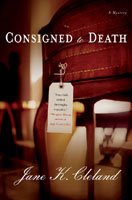
NEWSFLASH: Jane's book, Consigned to Death, is one of those nominated for an Agatha for Best First Novel. Congratulations, Jane!
Thanks for agreeing to chat with me, Jane. What's new with you?
Well, my new novel Deadly Appraisal is about to release in hardcover (April 17) and Consigned to Death in paper (April 3)... and if you peek at my website-- www.janecleland.net -- you'll see my tour is now 50+ events and growing... and I've just updated the website (revamped)... roll your mouse over the banner at the top of the home page-- kinda fun! ... also, I've revised the book discussion questions for Book Clubs to include more targeted questions (and martini recipes)... also, for antiques fans we have a new, free promotion called "What's it Worth?" where visitors can try their hands at antiques appraisals and see how their judgment compares to that of the experts at the renowned auction house, Leslie Hindman Auctioneers! Also, I'm the new MWA/NY Chapter president ... and the new chair of the Wolfe Pack's literary awards (we're the folks who award the Nero and the new Black Orchid Novella award in partnership with Alfred Hitchcock mystery magazine).

What does being MWA New York Chapter President entail? Will there be a lot of paperwork? Meet and greets? Will you wear a sash?
Do you know MWA's motto? It's been with us since the beginning -- CRIME DOESN'T PAY -- ENOUGH. Isn't that a hoot?
What do I do as president? There are two aspects of the job: running the local chapter and serving on the National Board. It's a big responsibility. I'm always thinking how I can help our members succeed. As a start, I adhere to the Hippocratic oath: First do no harm. By that I mean that Mystery Writers of America has a 60-year history of success -- I want to help us keep doing what we've always done well -- and help us become even more relevant.
MWA is an educational foundation -- thus, our programming is very important to our success. Locally, we have great speakers--and all of our programs, effective January 2007, are available to our members, for free, as podcasts on our website--www.mwa-ny.org .
Happily, so far at least, the paperwork has been manageable.
One of my roles as president is the delightful task of meeting people and ensuring they feel welcomed by MWA. I write a personal letter to every person who joins MWA/NY. At every MWA/NY meeting, I ask who's new and invite them to stand and introduce themselves. When I attend conferences, visit bookstores, facilitate book club discussions, it is my pleasure to serve as a MWA ambassador.
Sadly, there is no sash.
Your novel, Consigned to Death, is a fun play on words. In one sense, of course, it refers to the antiques business, in which you have some experience. So, having run your own rare book and antiques store, have you ever felt “consigned to death?”
Interesting question... “consigned to death,” as in “shoot me now.” Yes, when I ran my rare books and antiques store... I occasionally felt that way—for instance, when explaining to a customer that “free gift wrap” didn’t include those items she’d purchased elsewhere, or when we foolishly opened on Superbowl Sunday and not one customer came into the store all day. Mostly though, I recall special moments—the delight of discovering a satiny-smooth leather bound book among a box of battered volumes or the look of elation on a collector’s face when he found a treasure in our shop.
You are also, according to your website, an “experienced speaker and meeting facilitator.” How did you develop experience in this area, and how does one facilitate meetings?
There are two theories to training professional speakers: hire a subject matter expert and hope they can communicate effectively or hire a really smart, excellent communicator and teach them the curriculum or subject matter you want them to deliver. I got into the industry more than twenty years ago via the second approach. I sometimes think of myself as the 7-11 of the information business—I’m very adept at distilling complex information into manageable and understandable “data chunks.” I have a behavioral slant, so all my business communications work aims to help people do something better. My clients are blue-chip: I write seminars for the American Management Association (they assign me a subject matter expert); and I develop and facilitate workshops for clients such as Pfizer and PriceWaterhouse Coopers. As to how one facilitates meetings well—well, that’s a huge subject—in fact, I offer a seminar on the topic, so it’s tough to summarize in a sentence or two, but here goes: to facilitate a meeting well, ensure that everyone in the room feels like a million bucks while maintaining an iron grip of control. I’m not being flip—those are the two qualities that excellent facilitators share. There are lots of ways to achieve these seemingly mutually exclusive imperatives, so there’s plenty of room for individual styles and personalities to succeed.
Your book has been tied in with the popular Antiques Roadshow. Do you think this has helped to contribute to its success?
First let me clarify that there is no official “tie-in” with the wonderful program, Antiques Roadshow. I was surprised when the early reviews compared Consigned to Death to the Antiques Roadshow, but, of course, I was thrilled at the comparison. I think Margaret Maron, Kirkus Reviews, and others really nailed an aspect of the book that I hadn’t really latched onto—the intriguing complexity of appraising antiques. I’m new to the writing business—Consigned to Death is my first novel. I think it’s crucial, when you’re a debut author to have a succinct way to describe your book. It helps people understand what they may be getting themselves into by starting it. Therefore, I think it’s useful that I can explain Consigned to Death as: “It’s like an Antiques Roadshow for mystery fans.” I think that’s clear and accurate.
Before writing fiction, you wrote several books on business, including Putting First What Matters Most: Proven Strategies for Success in Work and in Life. Were you a business major?
My undergraduate work was in communications, but my graduate work was in business. I earned an MBA.
How did you come up with the idea for Josie Prescott, your protagonist?
I wrote a mystery featuring a sizzling hot private eye named Tony Barnes who was based in New York City. It received the nicest rejections! Part of the message was that the market wasn’t strong for new series featuring a male private eye based in New York. I took it as a personal challenge and developed a mystery series featuring a female amateur not based in New York. I really love Josie a lot, so I’m thrilled she has come to life!
The nicest rejections--that's funny. But so true.
Since you have a great deal of business experience, are you handling your own public relations?
I’m handling a lot of it, but I have a good friend who’s helping me with some aspects of it, and I also work with an outside service as well—Breakthrough Promotions.
I’m also helping the Wolfe Pack, the fan club of Rex Stout’s Nero Wolfe books, publicize their literary awards. Starting in 2007, I took over as chair of the awards. And I’m very excited to announce that we’re partnering with Alfred Hitchcock Mystery Magazine to offer a new writing award—for best novella! Rules for submission will be posted on www.nerowolfe.org starting in October!
You have a husband and four cats. Are they a part of your business empire?
Sadly, I must report that one of our little cats has died. Very hard. We loved the little guy a lot. As to your question, I wish I had a business empire for them to be part of! I’m just a new author trying to introduce my protagonist, Josie Prescott, to as many people as possible!
You seem like a goal-oriented person. What are your goals for the next few years? Do you have a long-term goal?
I am extremely goal-oriented—and I’m always in a hurry. My goal up until a few months ago was to get a new contract. I did so—so St. Martin’s Minotaur will be publishing Josie’s adventures for years. I’ve completely thrilled!
Other goals—to keep introducing Josie to as many people as possible; to launch the Black Orchid Novella Award in partnership with Alfred Hitchock Mystery Magazine (see www.nerowolfe.org starting in October for details); to ensure that the Nero Award (I’m the chair) maintains its high quality level; to write good books; to serve well on the New York Board of the MWA; and to snorkel a lot.
Long term goal—all of the above, except more so.
You are considered an inspired speech-maker. Have you utilized this in promoting your fiction writing?
Thank you for the nice words! I don’t know about “inspired,” but it’s true that I am an experienced public speaker—all those years delivering seminars and facilitating meetings add up!
To answer your question—I’ve developed two speeches related to the Nazi theme in Consigned to Death—one is called Finding Stolen Art: A Detective Takes on the Nazi and the other is called The Politics of Stolen Art: A Legacy of the Holocaust. I’ve delivered them at Temple Israel in Sharon, Massachusetts—one to the entire congregation, and the other to high school students. They were very well received.
If any of your readers would be interested in learning more about those speeches, or a speech on another topic—such as Growing a Small Business: How to Get the Word Out—I’ll be happy to talk to them about it. They can e-mail me at jane@janecleland.net or call 212.332.9976. I’m very good about responding to e-mail, so if they don’t hear from me within a day or two, that probably means I didn’t get it! Please call!
I’m very interested in speaking at libraries, Rotary Clubs, Chambers of Commerce, and the like.
Because I’ve spent a fair amount of time researching how I can best introduce Josie (my protagonist) to people, and have had some success, I also offer a presentation on: How to Promote Your Book—20 Ideas in 40 Minutes.
Did you always want to write fiction, or is this a new discovery of your creative side?
I sort of knew I wanted to write fiction, but it was a long-sublimated desire.
Will there be more Josie Prescott adventures?
I’m trilled to report—yes! Deadly Appraisal will be published (also by St. Martin’s Minotaur) in April, Lethal Legacy in April 2008, and so on. I have a multi-book contract, so we can expect Josie to have adventures for years to come!
 /
What’s been the most unexpected part of promoting the mystery?
How thrilling it is to meet fans! I knew it would be fun to meet fellow mystery lovers, but I didn’t expect to be brought to tears as fans confide in me how close they felt to Josie because of her strength; or how their dad died, too, so they understood Josie’s struggle to overcome her heart-wrenching grief; or to hear their stories—like Jerry, a fan’s dad who gave her a flashlight when she was a little girl so she could read late into the night without risking her mom’s ire. I feel truly fortunate and grateful.
You encourage people, on your website, to share thoughts about the value of some of their antiques—going beyond the monetary and thinking in terms of emotional value. What sorts of stories have people told you?
One fellow told us about how he and his wife found a painting in the attic just after they married and moved into their first house, and how it still hangs in their living room reminding them of their love—and they’ve been married more than fifty years. A woman told us about her grandmother’s quilt, and how it traced the stories of her life. Very moving.
Jane, when do you find TIME to do all this stuff? Am I talking like a loser? Do I need to buy one of your books to help prioritize my life?
Ah, priorities! Part of why it seems that I accomplish a lot is that I don’t spend time doing things that other people do. For instance, I don’t have children! Another part is personality—I can’t sit still! I like being busy and I like getting things done. Still another part is that I’m a late bloomer and I want to make up for lost time!
See, that's a problem: I can sit still for HOURS.
How can people find out more about Jane Cleland and her fictional creation, Josie Prescott, and the mystery called Consigned to Death?
My website is a good source of information: www.janecleland.net – there’s an excerpt so people can try the book to see if it’s of interest to them, for instance.
I post two BLOGS a month—and starting this month, they’re available as podcasts! I discuss everything from nightmares to characterization through suspense.
The newsletters keep people up to date on what’s going on – like the major change in cover art that will occur when Consigned to Death is released as a paperback—and will be carried over in the branding with Deadly Appraisal. You can see the new covers in an article in newsletter, Vol I, No. 6: http://www.janecleland.net/htm/newsletter/newsltr.htm
I also include an unpublished fact about Josie in every issue of the newsletter--fun! Anyone interested in receiving it via e-mail can sign up on the site.
There are photos of Josie’s world on the site, recipes for all of the dishes mentioned in the book, and loads of other informative and fun content!
I’d love to hear from people. Folks are welcome to e-mail me at jane@janecleland.net or call 212.332.9976. As I mentioned above, I’m very good about responding to e-mail, so if they don’t hear from me within a day or two, that probably means I didn’t get it! Please try again or call!
Thursday, March 1, 2007
POPPA
Elizabeth Zelvin
When I set out to write Death Will Get You Sober, I chose an amateur sleuth as my detective because I knew next to nothing about cops. I had read plenty of police procedurals, but not for the police procedure. I followed fictional favorites like Reginald Hill’s Dalziel and Pascoe, Julie Smith’s Skip Langdon, and Donna Leon’s Commissario Brunetti for their personal lives—in other words, character development. But I had no sense of real life police officers as people.
That changed in 2003, when I was invited to take a part-time counseling job with a New York City outfit called Police Organization Providing Peer Assistance (POPPA). Founded in 1996 in response to a double-digit rash of suicides in NYPD as a resource by cops for cops, POPPA had just obtained funding to reach out to the thousands of officers affected by 911 and its aftermath. Active and retired police of all ranks had already been trained as peer counselors. They staffed a 24-hour hotline, known only by word of mouth, on a volunteer basis. Now they joined mental health professionals like me in teams that visited every command in the five boroughs to educate uniformed police about how emotional fallout from 911 might be affecting them 18 months later and to tell them how POPPA could help.
The way we operated was counterintuitive for us clinicians. We didn’t make the groups we addressed sit in a circle and share about their post-traumatic stress. We had five or ten minutes—right after roll call, when the cops had received their day’s assignment and were eager to get out on the streets—to say our piece and invite anyone who wanted to call the hotline, anonymously if they wished, and talk further with a cop who understood and was not affiliated with the Department. At the beginning, even the clinically savvy POPPA administration hardly let us open our mouths, so sure were they that only cops knew how to talk to cops. Gradually, the counseling cops we worked with came to trust us. And for me, the human beings inside the blue uniform—at least a thousand of them in the nine months the job lasted—came into focus.
The courage of these dedicated men and women was profound and deeply poignant, as was their pain. In a profession where toughness and fortitude are prized, many of these officers were carrying a heavy emotional load in silence. Later on, when we were allowed to spend a more extended period—30 or 40 minutes—with groups of cops assembled for inservice training—we were able to distribute an anonymous questionnaire, a PTSD checklist. In every group, at least one person suffered from one or more major symptoms: intrusive thoughts, nightmares, rage or irritability, inability to concentrate, avoidance of or panic response to stressful situations, increased alcohol use, marital conflict, feelings of despair and hopelessness. Yet these officers were still working, dealing with 12-hour shifts, cancelled weekends and vacations, and such duties as patrolling the subway tunnels with inadequate protection against possible dangers such as biological weapons. They also faced the hostility or indifference of a civilian population that had long since ended the love affair with the city’s police that had bloomed for a few months after 911 itself. All were required to attend training in counterterrorism measures. All believed terrorists would strike at New York again sooner or later.
In mystery fiction, we meet mostly detectives. Too often, we ignore the uniformed officers who risk their lives as first responders to a crisis, whether it’s a case of domestic violence, rape or murder, or the unimaginable, like the toppling of the World Trade towers. Let’s not forget the ordinary cops, young and scared but not allowed to admit it even to themselves, who run toward danger when the rest of us are running away.
Wednesday, February 28, 2007
The Naming of Characters
Sandra Parshall
T.S. Eliot wrote, “The naming of cats is a difficult matter,” and as a lifelong cat-owner, I agree -- but choosing a name for a fictional character takes difficulty to a whole new level. It’s a lot like naming a child. The recipient will live with your decision forever, and if you make a mistake the consequences won’t be pretty.
A baby, of course, is named before the parents have any idea how the kid will turn out. Will little Angelina develop into a tattooed hellion? Will Grace be a hopeless klutz? Or will their names in some way help to shape the people they become? I’m sure that somebody, somewhere, has spent a breathtaking amount of money studying such questions, but fortunately writers don’t have to wonder. We can form the characters, then give them names that suit. We can try out as many names as we like before deciding.
A character’s name has to do a lot of heavy lifting:
It should evoke personality. If a guy is always called Robert, never Bobby or even Bob, what does that say about him?
If ethnicity is important to the story, the name should convey that too. But you don’t have to call every Hispanic character Jose Gonzales. A little effort will turn up less common names that still tell the reader how to see the person.
A name can be a quick way to signal social status. I am not brave or foolish enough to reel off a list of low-class names and risk the fallout, but you know what I mean.
A name can tell us a character’s approximate age. How many toddlers do you know who are named Hortense or Archibald? How many 80-year-old women have you met who are named Britney or Morgan? The internet allows writers to search databases such as www.ssa.gov/OACT/babynames/ (compiled from Social Security records) and www.babycenter.com/general/ to find out what a character born in a certain year might have been named. Because I prefer classic names rather than the trendy concoctions that are going to seem laughable when their owners hit middle age and beyond, I’m happy to note that Emma has been the most popular name for baby girls in the U.S. for several years. We may have Ross and Rachel on Friends to thank for this. (I have a five-year-old named Emma, but although she believes herself to be an unusually hirsute little girl, she’s actually of the feline persuasion.) All those tiny Emmas, though, are growing up with a nearly equal number of girls named Madison. Aiden was the top male name in 2006, followed by Jacob, Ethan, Ryan, and Matthew. What will Madison and Aiden call their children twenty-five years from now?
The classics fit people of any age, but if the first name is a common one, the last might have to do double duty to give the character distinction. Kate is one of the most common names for female protagonists in mysteries, followed closely by all the variations of Katherine/Catherine/Kathleen -- Kat/Cat/Kathy/Katie/Kay. But Kate Shugak is singular, and so is Kay Scarpetta. In my new book, Disturbing the Dead, I named a lead character Tom Bridger, pairing a first name that conveys a solid, down-to-earth personality with a last name that is common among Melungeons in the Appalachians. The name Bridger is also a metaphor for the position that Tom, a half-Melungeon deputy sheriff, occupies between two segments of his mountain community. The reader may never think about this, but I have.
Sometimes a perfect name comes to a writer through sheer serendipity. When Tess Gerritsen was writing a book titled The Surgeon, she contributed to a charity auction by allowing a reader to purchase naming rights for a minor character, a female medical examiner. The reader named Dr. Maura Isles after a real person. The character grew in importance in subsequent books, and she grew into her name, which perfectly conveys the image of an elegant woman who is isolated within herself.
While searching for the perfect monikers for our characters, writers have to keep some no-no’s in mind: nothing that is impossible for the reader to pronounce; no two names starting with the same letter, lest the poor reader become confused; as few nicknames as possible, again to avoid confusion. Short, one-word names always have the edge, at least in English-language crime fiction. Look at a few U.S., Canadian, and British mystery novels. How many names of more than two or three syllables do you see? How many truly unusual names do you see? You could say this is laziness on the part of writers who don’t want to type long or difficult names again and again, and you might be half-right, but it’s also true that a mystery seems to move faster if everyone has a short, easy name.
A name is the most personal thing about a character, and the choice is not one the writer makes lightly. Wouldn’t it be nice if we could exercise the same discretion over our own names? As innocent babies, we have to take whatever label is slapped on us, whether it fits or not. But most names, amazingly enough, turn out to be good fits. How about yours? Do you love it, hate it, wish you could change it? What name would you have given yourself, and why?
Tuesday, February 27, 2007
On Writing, On Having Written
Sharon Wildwind
This morning’s writing problem: how am I going to get my uniformed police officer character, Avivah Rosen, out of her make-work public relations assignment and into being the driver for the detective investigating a strange murder?
The detective’s usual driver calls in sick and someone picks her name from the roster. Too easy. It has the element of random chance and it doesn’t cost Avivah anything. If she wants to be part of this investigation, she has to pay a price.
She barges into the Chief’s office and demands to be given real police work. Too melodramatic, and not at all like real life. She’d pay a price all right, probably be ordered to undergo a mental health evaluation.
So, no random chance and no hutzpah bordering on insanity. Maybe I’m looking at this from the wrong end. Detective Albern has heard good things about her. What? He asks for her to be assigned to him. Why? He wants something from her. What?
What can I do to make Albern different from Avivah’s previous bosses? One was a self-made, confident military police officer who recognized Avivah’s abilities and let her have her head as long as she turned in good work. The second was a throughly rotten person who almost wrecked her career. The third was a decent human being, but was beset with own problems to the point that he couldn’t help advance her career.
That’s what’s I’ve never done, a boss who will advancing her career. Avivah has been whining about wanting to do real police work, all right let’s make Albern an uber-boss. Tough. Demanding. Fair. Someone who will run Avivah ragged, but she’ll come out of the experience a better cop. How did Detective Albern get that way? Rule one: avoid all the police cliches. None of his relatives were cops killed in the line of duty. He’s not doing payback for getting his partner, or an innocent civilian killed. I’ve already got one character who loves his job to the point of near insanity and one who’s too smart for his own good, so those two motivations are out. He’s not terminally ill and desperate to leave a younger cop to carry on the tradition. He doesn’t have a five-year-old who was crippled by a stray bullet during a police gun battle. He’s not an alcoholic. He’s not looking for fast promotion, so he can enter politics.
It looks like I was wrong. This morning’s writing problem isn’t how to get Avivah on Albern’s team, but why Albern became a detective in the first place. Once I know who he is, he’ll have a reason for requesting Avivah on his team and my problem will be solved.
He really does need a first name . . .Nate is a nice name and I haven’t used “N” for a first name for one of the characters in this book yet. Nate Albern. Nathanial Albern. Detective Nathanial (Nate) Albern. Fifty-four years old. Happily married, with grown kids. Second marriage, I think. First wife died young. . . .What if his first wife was named Avivah? With an “h” at the end, which is the more unusual spelling? Hmm. . .
Monday, February 26, 2007
WHAT IF??? The difference between readers and writers...
By Lonnie Cruse
What if? It's an interesting question.
Whenever I attend the Love Is Murder conference in Chicago, the most interesting things seem to happen in the elevator. This year that happening was a quick discussion with someone between the first and second floors who introduced herself to me as "just a reader." There were three or four of us writers in the elevator and as many readers riding between floors. I'd checked this lady's name tag, in order to say "hello," and that's when she made the "I'm just a reader" statement. We writers quickly assured her that we couldn't do our job of writing unless she did her job of reading what we wrote. "Just readers" are extremely important to us "just writers." Although, I have to say I've never heard a writer confess to anyone, "I'm just a writer." Ego? Confidence? Whatever.
For me, it isn't about talent or lack thereof (which may be what readers are saying about themselves when they use the "just" word, that they don't believe they have the talent to write, but maybe they do? Where was I?) I believe it's the "What if?" question that sets the two groups apart.
"Just readers" see an item in the newspaper or on television, or overhear a snatch of conversation in public and think it's interesting, then they quickly move on with their lives.
"Just writers" see or hear the same thing and screech to a halt, fumbling for notebooks or napkins to jot an idea or phrase down, all the while asking themselves, "What if?" What if that wasn't an accident, but a murder? What if that young couple is faking a public marital spat while they check out the store for a possible robbery? What if? It's what makes us writers tick. It's that, ahem, weird imagination that allows us to take something ordinary and everyday and transform it into a whole new story. A story, hopefully, that "just readers" will want to read.
But "What if?" is really a two edged sword for an awful lot of writers. Not only is it a necessary question in order to keep us looking for new ideas, plot lines, scenarios, etc. but it can bring us to a grinding halt, staring at a blank page, as if hypnotized. As in:
What if I can't come up with an idea to write about?
What if I have the idea for the beginning and ending of the novel, but I can't fill in that awful saggy, baggy middle? (Which, by the way is MY very own, very personal "What if" bugaboo.)
What if I can't come up with another idea good enough to write a sequel to the last book?
What if my latest book doesn't sell well enough and my publisher drops me while I'm in the middle of writing the next one?
What if I die in mid-manuscript and the world never gets to read my current work of genius? (Which is bound to happen to an awful lot of writers, since we're nearly always in the middle of writing a new manuscript.)
These "What ifs" are a writer's worst nightmares. Not to mention daymares. Lack of self-confidence, an internal "editor," difficult to turn off, that constantly whispers in our ears, "This stinks," "You can't do this," Nobody is ever going to want to read this." Helpful little phrases like that. Then, of course, there are the guilt "What ifs":
Should I be spending all this time tied to my desk, writing about characters who don't really exist when I have a family who need me, a job to do at the office, a house to clean, groceries to buy, etc. ???
Writers are plagued with self-doubts, and "What if" is often the gateway to those doubts. We have to find a way to shut them off and concentrate on the "What if" of the story. How we can entice you lovely "just readers" to read our stuff.
If you've ever introduced yourself to a writer as "just a reader," please, let me encourage you to leave off the "J" word in the future. You ARE our bread and butter. And remember, it isn't any easier on our side of the desk than it is on yours.
Now, "what if" I get busy on a new story line slithering through my head?
Sunday, February 25, 2007
Congratulaions to Deadly Daughter Sandra
From All the Deadly Daughters!

Congratulations to our own Sandra Parshall, whose book, THE HEAT OF THE MOON, was nominated for an Agatha Award for Best First Mystery.
Sandra's book is wonderful; a trip to her website reveals that HEAT is now also available in the U.K., and her new book, DISTURBING THE DEAD, will be out soon.

We're proud to blog with such a great writer, and we're glad to see that she's been recognized for her work.
Saturday, February 24, 2007
Notes from the Morgue
DEB BAKER (Guest blogger)

How shall the burial rite be read?
The solemn song be sung?
The requiem for the loveliest dead,
That ever died so young?
A PAEAN, Edgar Allan Poe
I'm in the autopsy room with the deputy medical examiner. My sixteen-year-old daughter's face is twisted into a mask of agony.
"What am I doing here, anyway?" Ana says, griping in my ear again. It's a good question. Besides the three of us already mentioned, four young males complete the circle around the examining table. Two speeders, two car thieves. Not exactly my daughter's usual circle. Ana’s crime? Misjudging a left hand turn at a light. The oncoming car clipped her bumper. She’s in the morgue because of judge’s orders.
One of the carjackers is trying to stay awake. He shifts back and forth, eyes closing, while the Medical Examiner explains the autopsy procedure. I'm the only one who really wants to be there.
“How can you be absolutely sure the person is dead when they are bagged at the scene?” I ask, seizing the opportunity. I’m a mystery writer. I can’t help myself. “Have you ever bagged a live person?”
I get a poke in the back for my curiosity. “Shhh.” It’s my daughter. I’m embarrassing her. Nervous tittering from the captive audience. I think it’s a good question and wish I had my notebook along.
“That couldn’t possibly happen,” says the deputy medical examiner. “We have ways of knowing.”
Yah, sure. The mystery author in me doesn’t quite believe it. That begs another question. How does the M.E. know? I suspect she’s making it up. Before I can present the question, my daughter is tromping on my toes. She’s five-nine, I’m five-two. She has an advantage.
BTW, Six Feet Under was one of my all time favorite shows.
So my next question? "Do you really tag the body’s toes?"
“Yes,” the deputy M.E. says, frowning a little at my enthusiasm. I’m supposed to be appalled into solemn silence by the morgue, not doing cartwheels. She’s not sure I’m helping her cause.
A police officer shows us pictures, not of bodies, but of vehicles. “This one,” he says, “is a fatality. Three boys dead, the driver of the oncoming car, dead. The driver, sixteen-years-old, was the only survivor.”
More pictures, half of them the same type of accident my daughter had.
It starts to sink in. These kids slept-walked through the cold storage room, the bagging procedure, and graphic autopsy procedures. But accident pictures and the stories behind them have had an effect.
It’s about time.
Each of them believes they are infallible, nothing can hurt them. But they don’t have that same confidence when it comes to their friends’ lives. No one stopped to think about the friends in the car. Before now.
Ana isn’t complaining anymore. Her boyfriend had been in the passenger seat. What if…..? I’m noticeably quiet. Everyone in the room is thinking about what could have been.
All of us are grateful for what was.
The boys start asking question, looking thoughtful.
Thinking.
Subscribe to:
Posts (Atom)